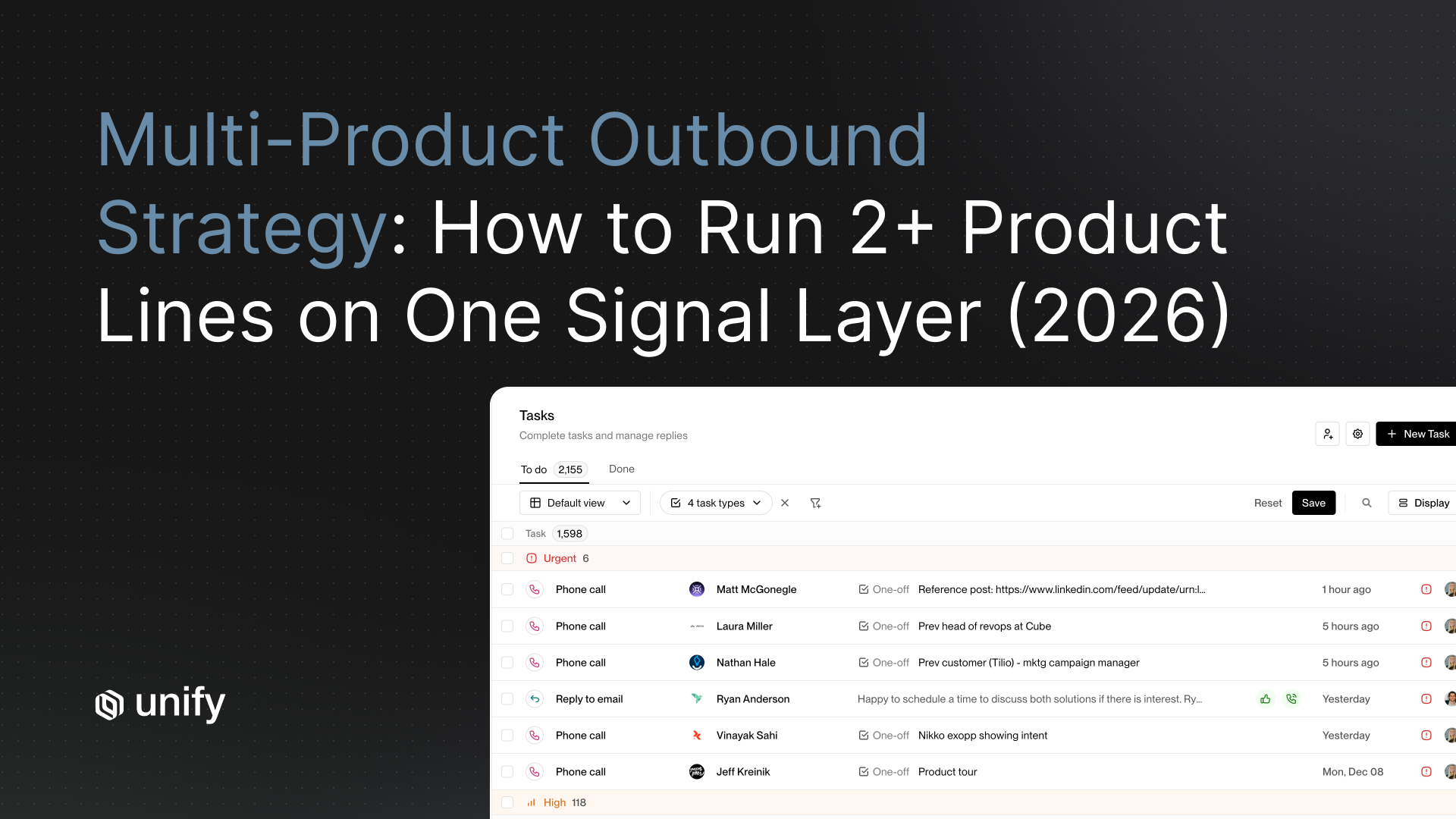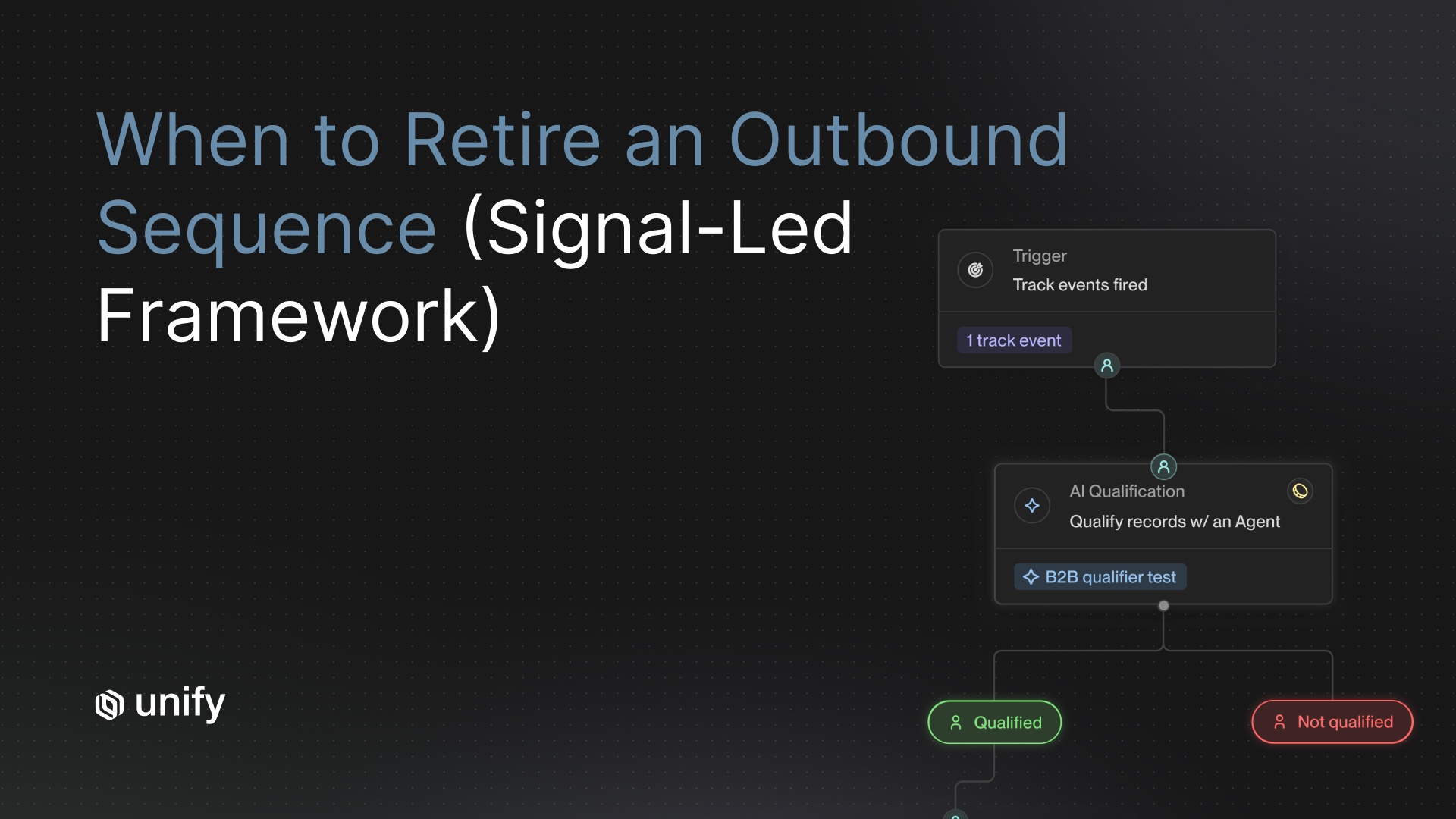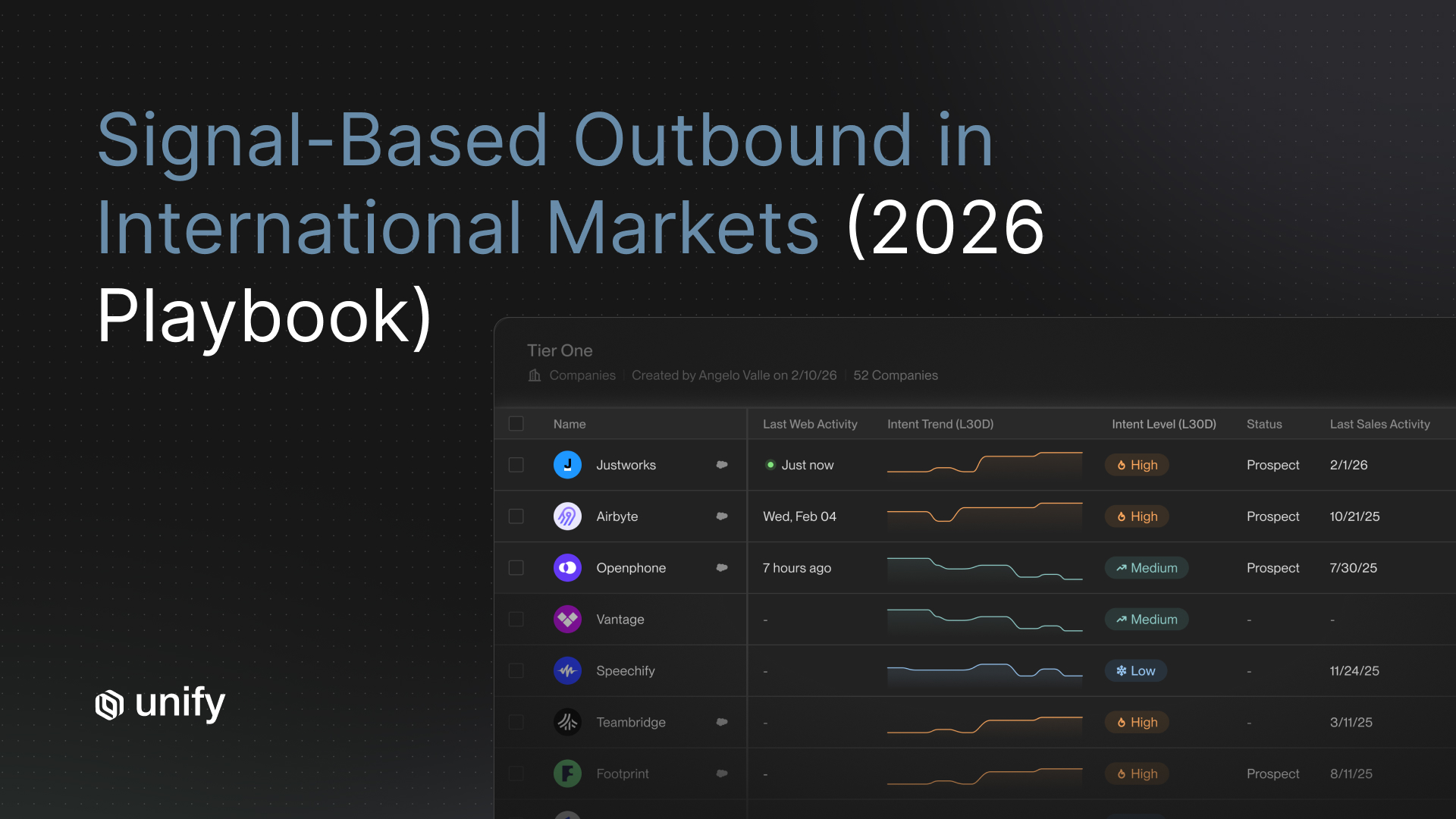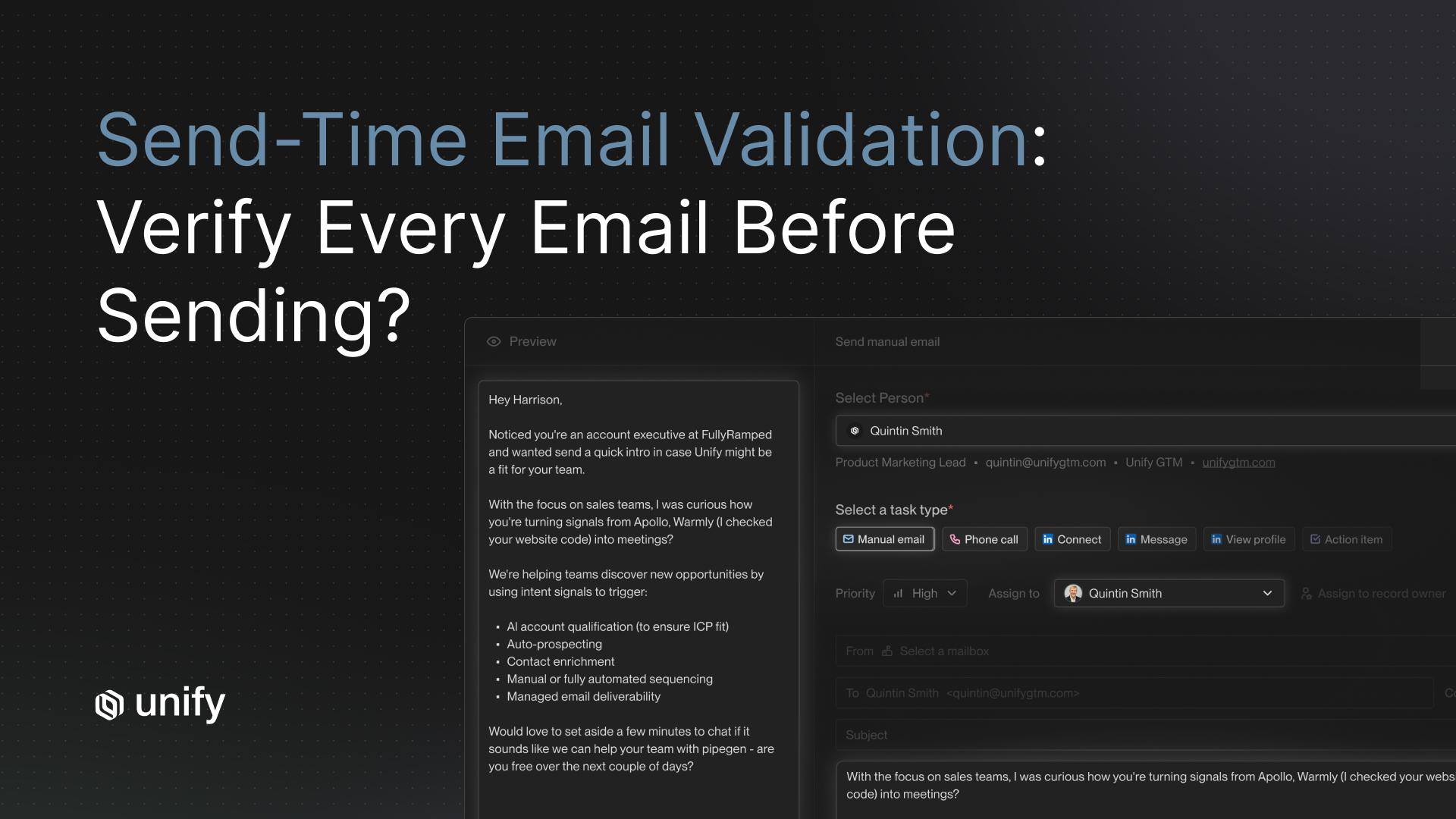
TL;DR: Most B2B teams only run one of the two layers of modern marketing automation. The first layer, handled by platforms like HubSpot, Marketo, and ActiveCampaign, covers inbound lead capture, email nurture, lead scoring, and CRM sync. The second layer, which most teams are missing, uses real-time buying signals to trigger personalized outbound sequences automatically. This article explains both layers, where legacy MAPs fall short, and how high-growth teams like Justworks (6.8X ROI in 5 months) and Pylon (4.2X ROI) are adding a warm outbound layer that sits alongside their MAP rather than replacing it.
- Legacy MAPs are excellent at inbound nurture. They were not built for signal-triggered outbound at scale.
- Warm outbound is not cold outreach. It reaches buyers who have already shown intent, at the moment they show it.
- The two layers complement each other. Unify ingests signals, runs the outbound motion, and syncs results back to HubSpot or Salesforce.
- Teams running both layers see faster pipeline creation without adding headcount proportionally.
Key Facts and Benchmarks
Methodology and Limitations
Data sources: All Unify customer outcome figures are drawn from published case studies on unifygtm.com/customers and blog posts on unifygtm.com/blog, fetched directly for this article in May 2026. Each metric is attributed to the specific named customer and published source.
No aggregated "Unify benchmark" figures are used. Each result reflects a single customer's experience. Outcomes vary based on team size, ICP, motion type, signal configuration, and sequence quality.
Exclusions: Competitor statistics are drawn from public third-party sources, not competitor websites. No claims from Common Room, Clay, Apollo, Outreach, 6Sense, Demandbase, or Amplemarket are used as sources.
Time window: Case study data reflects results as published on customer pages. Some pages do not specify the exact reporting period beyond the timeframe stated (e.g., "first 3 months," "first 5 months").
Marketing automation has been a standard part of the B2B stack for years. HubSpot, Marketo, and ActiveCampaign collectively process billions of emails, score millions of leads, and sync CRM records for companies of every size. They are genuinely good at what they were built to do.
The problem is that "what they were built to do" was designed around inbound. A prospect fills out a form. They enter a nurture sequence. They get scored as they engage. Eventually they are handed to sales. That loop works, and it works well, for inbound-driven motions.
But most high-growth B2B teams in 2026 are not running purely inbound motions. They are running signal-based outbound alongside their inbound engine, using real-time buying intent to find buyers before a form fill ever happens. That is a different motion, and it requires a different tool.
This article lays out what the two layers of modern B2B marketing automation actually are, where legacy MAPs stop and the warm outbound layer begins, and when teams should consider adding both.
What Do Legacy MAPs Actually Do Well?
Legacy marketing automation platforms handle inbound lead management better than any other category of software. HubSpot, Marketo (Adobe Marketo Engage), and ActiveCampaign have spent over a decade optimizing for this use case, and the tooling shows it.
Core MAP strengths include lead capture via forms and landing pages, behavioral lead scoring based on email engagement and page views, multi-step email nurture sequences triggered by CRM properties, list segmentation and contact management, CRM sync that routes leads to the right sales rep, and reporting on email open rates, click rates, and form conversions.
For teams whose growth motion is primarily inbound, a well-configured MAP is a force multiplier. Leads come in, they get scored, the hot ones get routed quickly, and the rest are nurtured until they are ready. That is a well-understood playbook with strong tooling behind it.
The honest assessment: if your pipeline comes entirely from inbound, a MAP is probably all you need for the marketing automation layer. The case for adding a second layer emerges when your team also wants to reach buyers who have not raised their hand yet, but who are clearly showing intent.
What Can't Legacy MAPs Do for Outbound Signal Automation?
Legacy MAPs cannot detect anonymous website visitors and immediately trigger a personalized outbound sequence to the right contact at that company. They cannot monitor 25+ real-time buying signals across sources like G2 intent, new hire job changes, champion tracking, and funding announcements, then automatically route each signal to the right play. And they cannot run AI agent research on a prospect at the moment of intent to generate a personalized first-touch email without a human in the loop.
These are not minor feature gaps. They reflect a fundamental architectural difference. MAPs were designed around form submissions and email engagement: the prospect initiates, the platform responds. Signal-based outbound works in the opposite direction: the platform detects intent, enriches the contact, and initiates personalized outreach, all before the prospect has identified themselves.
Anrok, the sales tax compliance platform, ran into this gap directly. Their growth team was using HubSpot alongside Outreach and ZoomInfo. The challenge was not that HubSpot was bad at nurture. It was that building outbound campaigns in HubSpot was significantly slower, and the platform lacked the flexibility to quickly experiment across different signals and verticals. Per the Anrok case study, their team found campaigns were 20% faster to build after moving their outbound motion to a dedicated layer. Their SDR workflows ran 4x faster compared to their previous ZoomInfo and Outreach setup.
The specific limitation that surfaces repeatedly: MAP workflows trigger on CRM data that is already in the system. Signal-based outbound triggers on real-time activity that often has no CRM record yet, from an anonymous visitor or a prospect who has never touched a form. To bridge that gap, teams need a layer that can identify the visitor, enrich them, qualify them against the ICP, and act, all within minutes.
What Is Warm Outbound and Why Does It Convert Better Than Cold?
Warm outbound reaches buyers who have already shown a behavioral signal of interest, at the moment that signal fires. It is not cold outreach, which contacts a buyer based on ICP fit alone with no prior signal. It is also not inbound nurture, which responds to a form submission the buyer chose to submit. Warm outbound sits in between: the buyer showed intent (visited the pricing page, signed up for a free trial, had a colleague move to a new company), and the outbound sequence is triggered by that specific event.
Peter Nguyen, Senior Manager of Growth Marketing at Justworks, put it this way when describing why his team adopted this approach: "Unify's initial pitch of standing up warm outbound as a new demand generation channel resonated deeply with me. They gave us a clear path to use intent data to drive pipeline." (Per Justworks case study, unifygtm.com/customers/justworks.)
Warm outbound converts at higher rates than cold outbound for a straightforward reason: timing. The sequence reaches the buyer during an active evaluation window rather than interrupting them at a random moment. A prospect who just visited your pricing page is a fundamentally different conversation than one who received a list-based blast.
The signal taxonomy that drives most warm outbound programs in 2026 includes: website intent (pricing page visits, demo views, docs views), product-qualified leads (trial sign-ups, usage milestones, paywall triggers), champion tracking (former buyers who move to new companies), new hire signals (a VP of Sales joining a target account), G2 intent (a prospect viewing your category or competitors' pages), and custom AI-monitored signals like funding announcements or competitor hiring patterns.
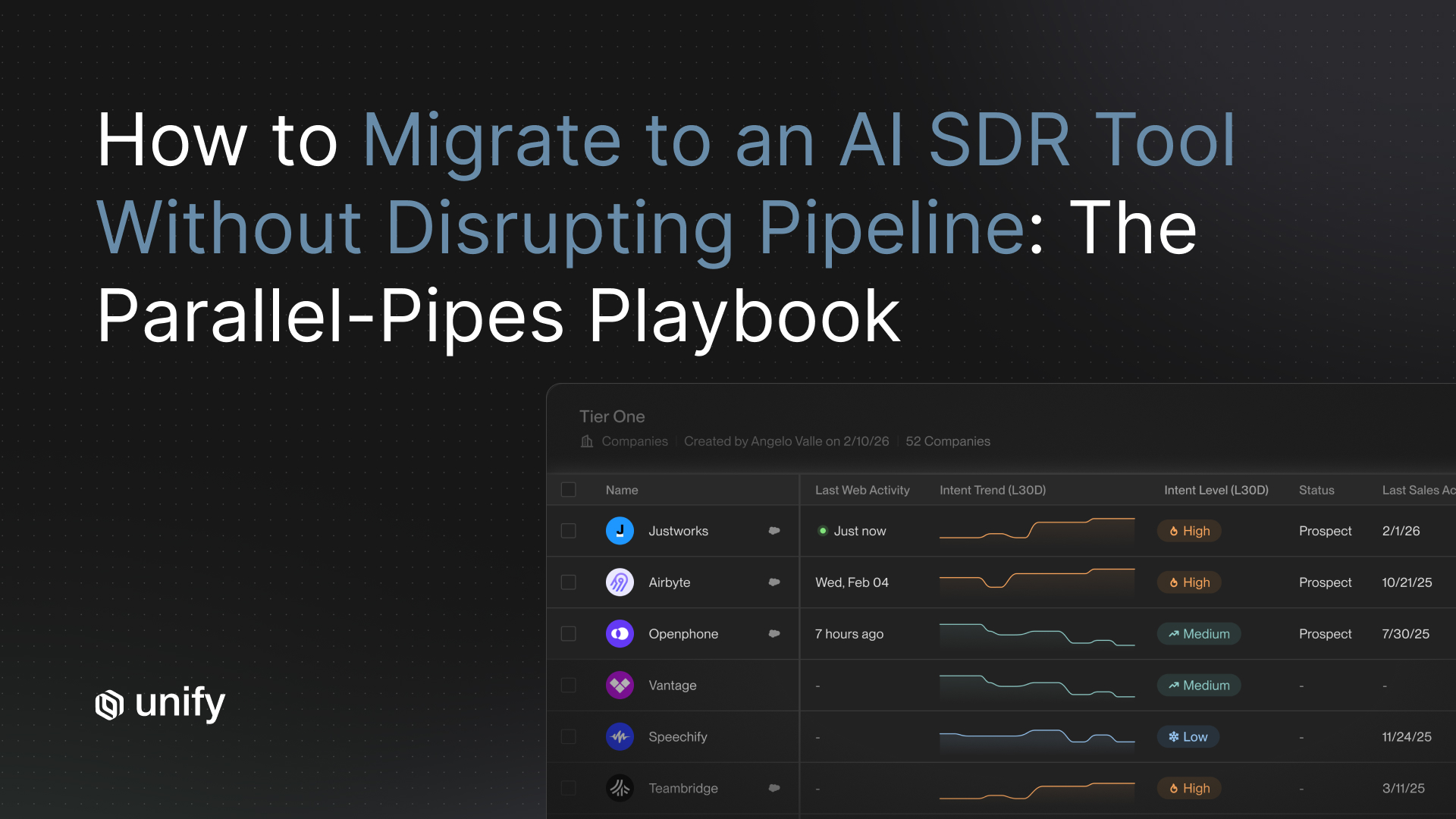
Justworks used this approach to generate a 6.8X ROI in the first five months, launching three plays within three days of onboarding and booking their first meeting within a week. (Per Justworks case study, unifygtm.com/customers/justworks.)
How Do the Two Layers of B2B Marketing Automation Work Together?
The modern B2B marketing automation stack has two distinct layers, and they are designed to work in parallel rather than compete.
Layer 1: The MAP (inbound nurture). HubSpot, Marketo, or ActiveCampaign handles form-based lead capture, multi-step email nurture triggered by CRM data, lead scoring, list management, and the CRM as source of truth. This layer does not change. If your team already has a MAP configured and running, keep it.
Layer 2: The warm outbound layer. A platform like Unify ingests real-time buying signals, identifies and enriches contacts, runs AI agent research to qualify and personalize, enrolls those contacts in multi-touch sequences, and writes all activity back to HubSpot or Salesforce so the CRM stays current. This layer sits alongside the MAP and handles the buyers who have not filled out a form yet.
The two layers do not overlap in function. The MAP handles the inbound funnel. The warm outbound layer handles the proactive signal-to-sequence motion. A team that has both running has coverage across the full buyer journey: from anonymous intent detection through to a personalized first touch, while the MAP continues to nurture form fills, score leads, and route contacts.
Unify's native HubSpot integration reflects this design explicitly. The integration reads contacts, companies, and deals from HubSpot (refreshed every 15 minutes), uses that data to build audiences and apply rules of engagement, and syncs all outbound activity back to HubSpot records. The MAP stays the source of truth; the outbound layer adds the signal-triggered motion on top. Per the Introducing Unify's HubSpot Integration blog post (October 2025), 46% of Unify's demo requests come from HubSpot CRM users, reflecting how common this two-layer configuration is in practice.
How Unify Covers the Warm Outbound Layer
Unify is a warm outbound platform that combines 25+ intent signals, B2B buyer data, AI agents, sequences, and automated plays into a single workflow. It is not a replacement for HubSpot or Marketo. It is designed to sit alongside the MAP, add the signal-triggered outbound layer, and sync results back to the CRM.
- Signals: 25+ native intent signals including website visitor identity (75%+ match rate), G2 intent, new hire tracking, champion tracking, PQL triggers, and custom AI-monitored signals via Infinity Signal. (unifygtm.com/signals)
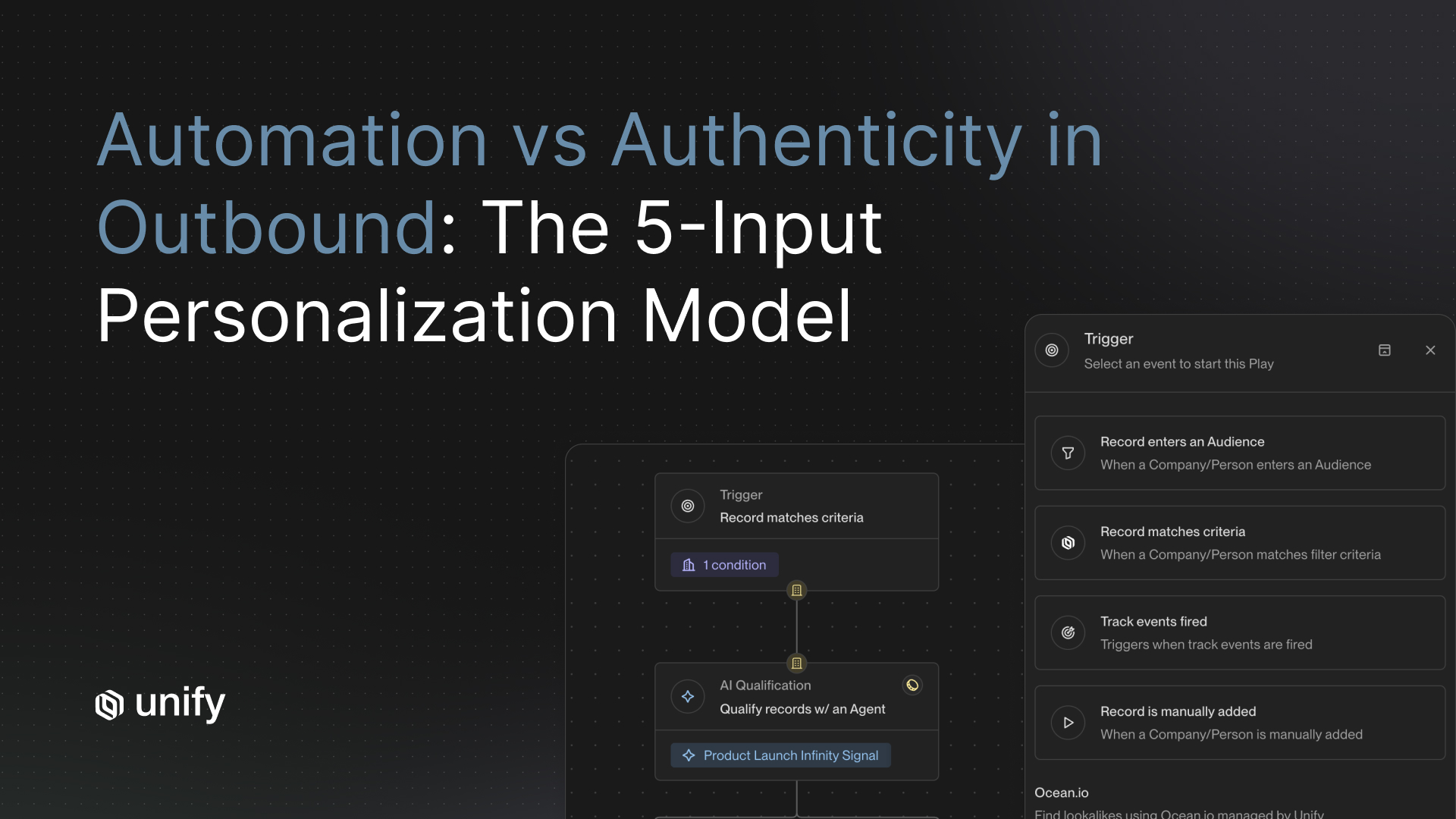
- Plays: Automated outbound workflows that trigger from a signal, run AI agent research, enrich contacts, and enroll them in personalized multi-touch sequences without manual rep intervention. (unifygtm.com/plays)
- AI Personalization: AI agents research prospects from social profiles, company websites, and news sources to generate personalized subject lines, opening hooks, and value statements at scale. (unifygtm.com/product/personalization)
- CRM Sync: Bi-directional HubSpot and Salesforce integration with 15-minute refresh cycles keeps the MAP as the source of truth while Unify runs the outbound motion.
How to Evaluate B2B Marketing Automation Software: Neutral Criteria
Evaluating marketing automation software requires separating inbound-focused needs from outbound signal automation needs. The same platform rarely excels at both. Use these criteria to assess any tool in this category.
How Unify Covers These Criteria
Unify addresses signal breadth with 25+ native intent signals including website visitor identification (75%+ match rate), G2 intent, new hire tracking, champion tracking, PQL triggers, and Infinity Signal (custom AI-monitored triggers). Time to action is handled by always-on Plays that trigger enrollment automatically when a signal fires. AI Personalization uses agent research from social, web, and news sources to generate contact-specific messaging rather than mail-merge tokens. CRM writeback is bi-directional for both HubSpot and Salesforce with 15-minute refresh cycles. Enrichment uses a waterfall approach across 30+ verified sources. Anrok reported their team could build campaigns 20% faster in Unify compared to HubSpot (per Anrok case study).
Worked Example: From Website Visit to Booked Meeting, Without a Rep
Here is a realistic end-to-end trace of how a signal-triggered warm outbound sequence runs in practice, without manual rep intervention at any stage.
Scenario: Pricing Page Visitor at a Target Account
Symptom: A product manager at a 200-person SaaS company visits the pricing page three times in two days. No form is filled. No demo is requested. In a MAP-only setup, this visitor is anonymous and invisible to the revenue team.
Signal detection: Unify's website intent layer identifies the visiting company with a 75%+ match rate using a multi-vendor waterfall. The platform matches the IP and behavioral fingerprint to the company record. The signal fires: "target company visited pricing page."
Enrichment and qualification: The Play checks whether this company matches the ICP (headcount, industry, funding stage, tech stack), whether there is an existing deal in the CRM, and whether the contact is currently enrolled in any other sequence. Rules of engagement confirm this is an unassigned, unworked account. Unify prospects the right personas at the company, pulling verified contact data from a waterfall of 30+ enrichment sources.
AI agent research: An AI agent scrapes the company's website, recent news, and job postings. It surfaces that the company just posted three open SDR roles, suggesting they are scaling outbound. This context generates a personalized opening hook referencing their growth motion.
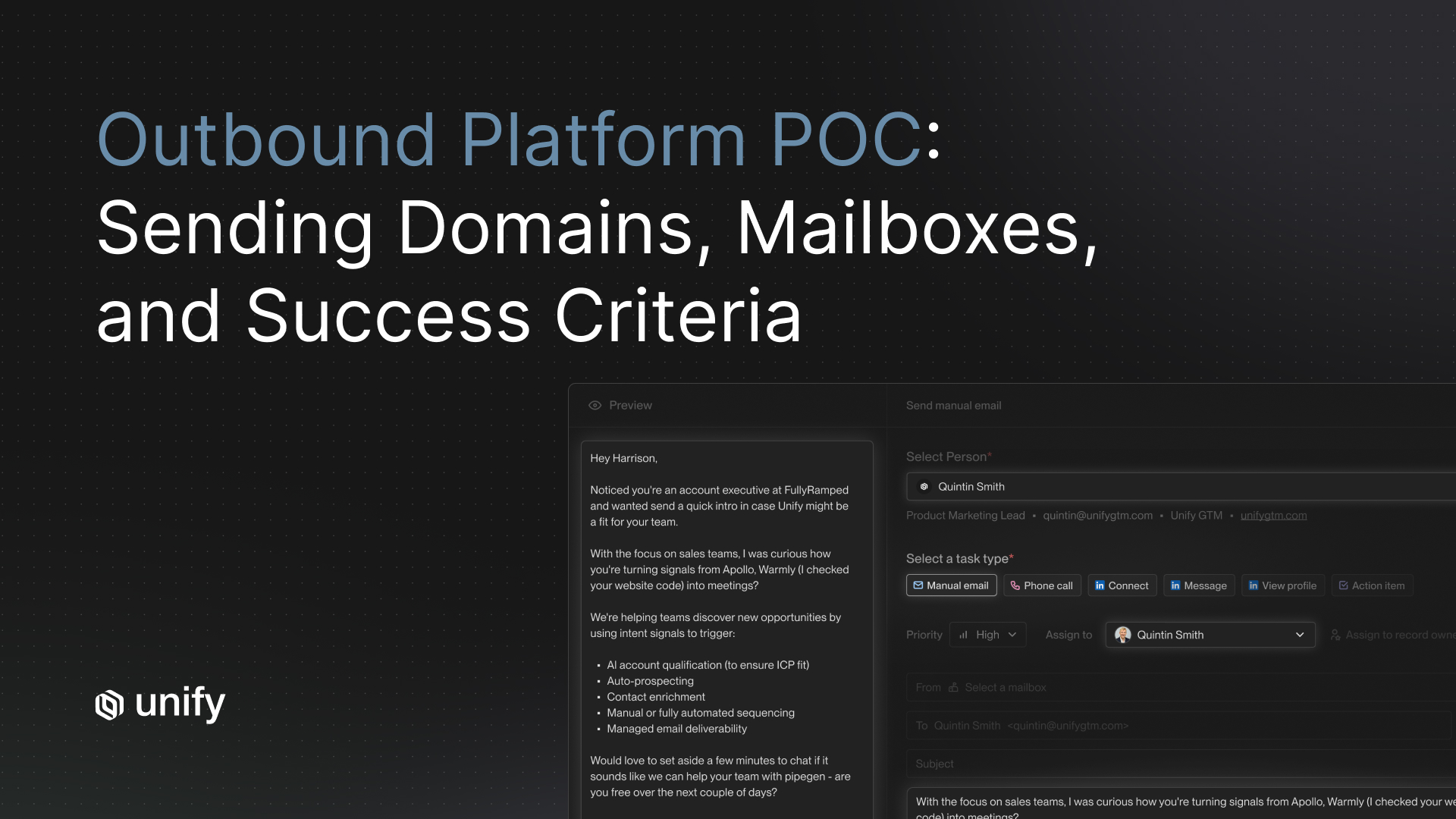
Sequence enrollment: The qualified contact is enrolled in a multi-step sequence. The first automated email is sent within minutes of signal detection, personalized to the prospect's company context. Follow-up steps are scheduled across email and manual call tasks for the rep, spaced over 10 days.
CRM sync: All activity is written back to HubSpot. The contact record is updated with the pricing page visit signal, the sequence enrollment date, and each email open or reply as it occurs. A Slack alert notifies the owning rep that the account is active.
Outcome: The prospect replies to the third email, books a demo, and shows up. The rep enters the call knowing the prospect visited pricing three times and is actively hiring SDRs, without spending a minute on research.
This is the warm outbound motion. The MAP never touched this contact because no form was filled. The signal layer identified them, qualified them, personalized the outreach, and routed the engaged lead to the rep at the right moment.
Decision Framework: When to Use MAP Only vs. MAP + Warm Outbound Layer
The right configuration depends on your motion, team size, and how much of your pipeline comes from inbound versus proactive outreach.
- If your motion is entirely inbound (SEO, content, paid ads, events) and you have no outbound component: A MAP like HubSpot or Marketo covers your automation needs. No additional layer is required yet.
- If you have inbound running well but reps are manually pulling CRM lists to sequence: Add a warm outbound layer. The manual work is a signal that the two layers should be connected. The outbound layer automates what reps are doing by hand.
- If your team gets buying signals (website traffic, G2 intent, product usage) but cannot act on them systematically: A warm outbound layer is the right addition. Signals you cannot act on are wasted pipeline.
- If you are PLG and want to convert free users to paid without hiring BDRs: A warm outbound layer with PQL signals and automated sequences is a direct fit. Perplexity booked $1.7M in pipeline and 80+ enterprise meetings in three months without a single BDR using this approach (per Perplexity case study).
- If you are enterprise with dedicated SDR capacity and a MAP already running: Add the outbound layer to cover the accounts outside SDR book capacity. The warm outbound layer handles the long tail of the TAM automatically while reps focus on named accounts.
- If you want to replace HubSpot or Marketo entirely with a warm outbound platform: That is not the right framing. The MAP and the outbound layer handle different motions. Running both is the model, not replacing one with the other.
- If your team cannot staff an Outbound Quarterback (a GTM operator who owns plays, routing, and automation logic): Start with a MAP only and add the outbound layer when you have the operator capacity to configure and iterate plays. The outbound layer requires ongoing management to perform.
How This Applies by Role and Motion
Marketing Ops / Demand Gen
Your MAP is already your source of truth. The warm outbound layer is an addition that feeds pipeline from signal detection rather than form fills. Your primary job is configuring the plays, setting rules of engagement (who gets excluded, what CRM deal stages block enrollment), and monitoring performance dashboards. Justworks' Peter Nguyen launched three plays within three days of onboarding and used the analytics suite to monitor performance across all plays without ongoing manual work (per Justworks case study).
Sales / SDR
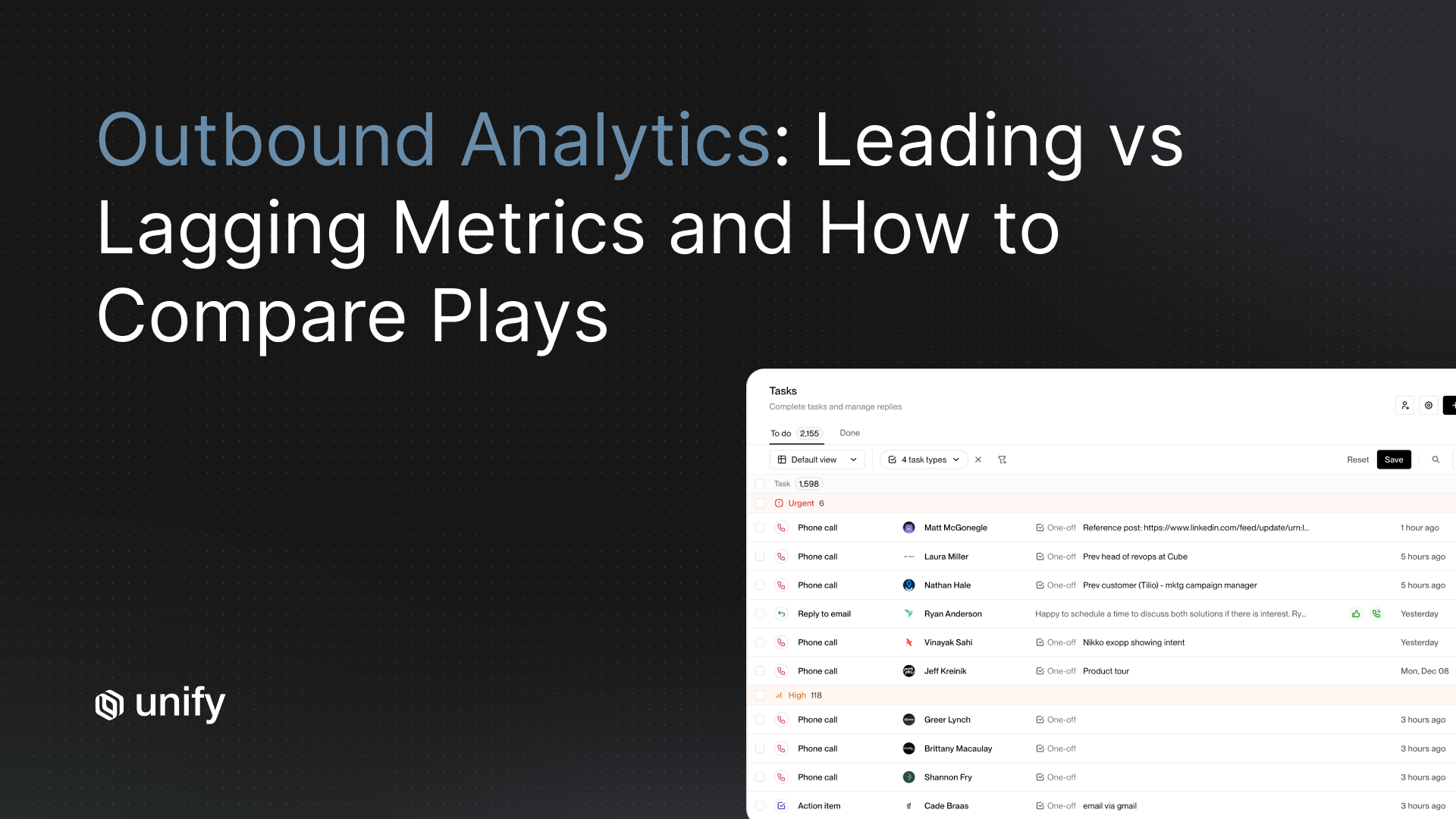
The warm outbound layer automates the parts of prospecting that currently consume hours of your day: pulling lists, researching contacts, writing personalized first-touch emails. Your role shifts toward responding to engaged, warm leads rather than cold prospecting from scratch. Plays handle the automated sequences; you handle the replies, calls, and follow-through on high-intent signals that escalate to manual tasks.
Growth Marketing (PLG)
Signal-based warm outbound is the highest-leverage motion for PLG teams. PQL signals (trial sign-ups, usage milestones, paywall triggers) fire the outbound sequence automatically. You define the signal threshold, the persona to contact, and the messaging, and the platform runs it continuously. Perplexity used this exact pattern to generate $1.7M in enterprise pipeline in three months (per Perplexity case study).
RevOps
Your primary concern is CRM integrity and rules of engagement. The warm outbound layer must write activity back to HubSpot or Salesforce correctly, respect existing deal ownership, and not enroll contacts that are mid-cycle. Verify bi-directional sync, 15-minute refresh cycles, and that your exclusion logic prevents duplicate outreach. The integration architecture is the same as any other stack addition: configure it correctly upfront, monitor for data drift, and set up reporting that connects outbound activity to pipeline in the CRM.
SMB vs. Mid-Market vs. Enterprise
SMB teams often start with one or two plays targeting website visitors and closed-lost re-engagement. The configuration is simple and the ROI is immediate because the entire TAM can be covered automatically. Mid-market teams layer in champion tracking, new hire signals, and G2 intent on top of website plays. Enterprise teams run tiered plays: fully automated for the long tail, human-assisted for named accounts, and rep-led for strategic logos.
What Teams Have Seen After Adding the Warm Outbound Layer
Justworks: 6.8X ROI in 5 Months
Justworks, the HR and payroll platform, wanted to convert intent data from 6sense and G2 into actionable outbound campaigns. Their growth marketing team needed a way to do this without building custom integrations between their existing tools. They used Unify to identify high-intent website visitors (pricing and demo page visitors), enrich contacts via Salesforce, and enroll them in AI-personalized sequences. The result: 6.8X ROI in the first five months, three plays launched within three days of onboarding, and their first meeting booked within a week of going live. Per Peter Nguyen, Senior Manager of Growth Marketing at Justworks: "Having signals and sequencing in the same platform has so many advantages. The signal is the reason why we're reaching out, and we want to reference that in the email we send." (Per Justworks case study, unifygtm.com/customers/justworks.)
Pylon: 4.2X ROI and 3X More Meetings
Pylon, the B2B customer support platform, launched 10 automated plays within two weeks of onboarding and saw a 3X increase in outbound meetings booked. Their outbound motion combined website intent signals, tech-stack data, new hire signals for decision-maker identification, and AI-powered personalization by company size and industry. The result was a 4.2X ROI on their Unify investment and $300K in new pipeline within weeks of going live. Per Marty Kausas, Co-Founder and CEO of Pylon: "This is our go-to-market operating system, and one that every company should invest time and money in so that teams can focus more on building great products, and the demand will follow." (Per Pylon case study, unifygtm.com/customers/pylon.)
Edge Cases and Common Confusions
Job seeker traffic vs. buyer interest
Website intent signals capture all visitors, including job seekers viewing your careers page. A company that shows high website intent because ten employees are browsing your jobs page is not a buying signal. Validate: check which pages drove the signal. Pricing, product, and docs page visits are buying signals. Careers and about page visits are noise. Use page-level filtering in your intent configuration to exclude non-buying pages.
Email opens only vs. genuine engagement
Email open rates are an unreliable engagement signal since Apple Mail Privacy Protection and similar features pre-load opens. A sequence with a 70% open rate but 0% click rate and 0% reply rate is not performing well. Validate engagement by clicks, replies, and meetings booked, not opens. Use opens only as a filter to exclude clearly undeliverable addresses.
Warm outbound vs. spam
Warm outbound that is personalized, relevant to a signal the buyer just showed, and sent to one contact at a time is categorically different from mass cold email blasting. The distinction is signal relevance and personalization depth. A sequence triggered by a pricing page visit referencing that visit is relevant. A sequence sent to 10,000 contacts from a bought list is spam. Managed deliverability infrastructure (dedicated sending domains, mailbox warming, bounce prevention) protects sender reputation when running outbound at volume.
MAP workflow vs. outbound play
A MAP workflow triggers on a CRM property change (e.g., lead score reaches 50). An outbound play triggers on a real-time signal (e.g., a person at a target account visits the pricing page right now). The input is different, the output is different (nurture email vs. personalized outbound sequence), and the tooling is different. Conflating them leads to trying to make the MAP do something it was not designed for.
AI SDR vs. AI-assisted warm outbound
Fully autonomous AI SDRs attempt to replace the human sales rep entirely. AI-assisted warm outbound automates the research, enrichment, and sequence trigger steps but keeps humans in the loop for calls, complex replies, and high-value account strategy. The latter is the dominant model in 2026 for most B2B teams because it preserves the judgment and relationship capacity that AI cannot replicate, while automating the volume work that humans should not be spending time on.
Stop Rules and Red Flags: When to Pause or Reconfigure
Top 5 Mistakes to Avoid with B2B Marketing Automation and Warm Outbound
- Trying to run signal-triggered outbound entirely inside your MAP. MAPs were built for inbound nurture. Forcing outbound signal automation into HubSpot or Marketo workflows creates brittle, hard-to-maintain configurations that still require manual steps.
- Launching plays without defined rules of engagement. A play that enrolls an existing customer, a mid-cycle opportunity, or an account owned by a rep who did not know it was running destroys trust and creates CRM chaos. Document exclusion logic before the first play goes live.
- Treating warm outbound like cold blasting at scale. Volume without signal relevance and personalization is spam. Signal-triggered outbound works because the timing and context are right. Remove either element and conversion drops to cold-outbound levels.
- Measuring success by email open rate. Open rates are unreliable post-Apple Mail Privacy Protection. Measure reply rate, meeting booked rate, and pipeline attributed to the play.
- Adding the warm outbound layer without assigning an Outbound Quarterback. Someone needs to own play configuration, exclusion logic, sequence copy, and weekly performance reviews. Without this operator role, the plays run unchecked, performance drifts, and the system produces noise instead of pipeline.
Frequently Asked Questions
What is B2B marketing automation software?
B2B marketing automation software helps revenue teams automate repetitive marketing and outreach tasks. Traditional platforms like HubSpot and Marketo focus on inbound lead capture, email nurture workflows, lead scoring, and CRM sync. A newer category adds signal-triggered warm outbound: detecting real-time buying intent and automatically launching personalized outbound sequences without manual rep involvement. In 2026, most high-growth B2B teams run both layers.
What is the difference between a MAP and a warm outbound platform?
A marketing automation platform (MAP) like HubSpot or Marketo excels at inbound lead capture, nurture email sequences, lead scoring, form management, and CRM sync. A warm outbound platform detects real-time buying signals (website visits, product usage, job changes, G2 intent) and automatically triggers personalized outbound sequences at the moment of intent. The two layers are complementary, not competing. MAPs handle what happens after a form fill; warm outbound platforms handle what happens before one.
Can HubSpot run warm outbound campaigns triggered by buying signals?
HubSpot has workflows triggered by CRM properties and form fills, but it lacks native real-time signal ingestion across sources like website visitor identity resolution, G2 intent, new hire detection, and champion tracking. Building signal-triggered outbound in HubSpot typically requires manual configuration, third-party enrichment tools, and significant ops time. Anrok found that HubSpot lacked the flexibility for rapid outbound experimentation across new verticals and moved their outbound motion to a dedicated layer, reporting campaigns were 20% faster to build (per Anrok case study).
What buying signals should B2B marketing teams track?
High-value buying signals for B2B marketing include: website intent (pricing page visits, demo page views, docs views), product-qualified lead signals like trial sign-ups or usage milestones, champion tracking (former buyers who move to new companies), new hire detection (a new VP of Sales joining a target account), G2 intent (a prospect viewing your category page or competitors), and custom AI-monitored signals like funding announcements or competitor hiring patterns. Platforms like Unify consolidate 25+ of these signals natively so teams do not need separate integrations for each source.
What is warm outbound and how does it differ from cold outbound?
Warm outbound reaches buyers who have already shown intent: they visited your pricing page, signed up for a free trial, or match a real-time buying signal. Cold outbound contacts buyers with no prior signal, relying on ICP fit alone. Warm outbound converts at higher rates because timing matches buyer interest. It differs from inbound nurture in that your team initiates the contact rather than responding to a form submission the buyer chose to make.
How does Unify work with HubSpot or Marketo?
Unify sits alongside your existing MAP rather than replacing it. It reads contacts, companies, and deals from HubSpot (refreshed every 15 minutes), detects buying signals, runs AI agent research, and enrolls contacts into personalized outbound sequences. All activity syncs back to HubSpot so your MAP remains the source of truth. The integration was designed specifically for teams already running HubSpot for inbound nurture who want to add a signal-triggered outbound layer on top. Per the HubSpot Integration blog post (October 2025), 46% of Unify's demo requests come from HubSpot CRM users.
What results have teams seen from adding a warm outbound layer?
Results vary by team size, motion, and ICP. Per published case studies: Justworks achieved 6.8X ROI in the first five months (per Justworks case study). Pylon saw 4.2X ROI and a 3X increase in meetings booked (per Pylon case study). Anrok generated $300K+ in pipeline in three months (per Anrok case study). Perplexity booked $1.7M in pipeline and 80+ enterprise meetings in three months without a single BDR (per Perplexity case study). Each outcome reflects that specific team's configuration, ICP, and motion.
When should a B2B team add a warm outbound layer to their MAP?
Add a warm outbound layer when: your inbound funnel generates leads but conversion from intent to outreach is slow or manual; your team has buying signal data in multiple systems with no unified action layer; reps are manually pulling CRM lists to enrich and sequence; or you want to run outbound campaigns without scaling headcount proportionally. A MAP alone is sufficient when your motion is entirely inbound and nurture-based with no outbound component. Start with one play (website intent on unassigned accounts) and iterate from there.
Glossary
- Marketing Automation Platform (MAP): Software designed to automate inbound lead capture, email nurture sequences, lead scoring, and CRM sync. Examples include HubSpot, Marketo (Adobe Marketo Engage), and ActiveCampaign. MAPs trigger actions on form submissions and CRM property changes rather than real-time external signals.
- Warm Outbound: Outbound outreach initiated in response to a real-time buying signal (website visit, trial sign-up, job change, G2 intent), reaching a prospect at the moment they show interest rather than randomly or based on list timing alone. Distinct from cold outbound (no signal) and inbound nurture (buyer-initiated).
- Intent Signal: A behavioral or firmographic event that indicates buying interest from a prospect or company, such as a pricing page visit, a G2 category page view, a new hire in a buying role, or a competitor technology installation. Intent signals are the trigger inputs for warm outbound plays.
- Play: An automated outbound workflow in Unify that triggers from an intent signal, runs AI agent research, enriches and qualifies the contact, and enrolls them in a personalized multi-touch sequence, all without manual rep involvement unless the contact replies or a high-intent escalation is triggered.
- Product-Qualified Lead (PQL): A prospect or user who has demonstrated buying intent through product behavior, such as signing up for a free trial, hitting a usage limit, or reaching a paywall. PQL signals are particularly valuable for PLG (product-led growth) teams running warm outbound to convert free users into paying customers.
- Champion Tracking: A signal type that monitors when former customers or buyers move to new companies. When a champion joins a new organization, that is a high-confidence warm outbound trigger because the buyer already has direct experience with the product.
- Infinity Signal: Unify's custom AI-monitored signal type that uses natural-language prompts to detect specific buying triggers across the web, news feeds, job postings, and social sources. Examples include a company announcing a new product line, hiring for a specific role type, or referencing a competitor in a press release.
- Outbound Quarterback (OBQB): The GTM operator who owns the end-to-end warm outbound system, including play configuration, rules of engagement, exclusion logic, sequence copy, and performance review. This role typically sits in Growth, Marketing, or RevOps and is a prerequisite for a signal-based outbound program to run effectively (per Unify Guide 1, "The Outbound Sweet Spot").
- Bi-directional CRM Sync: A two-way data connection between a warm outbound platform and the CRM (HubSpot or Salesforce) that reads existing contact and deal data from the CRM to inform play logic and writes all outbound activity (enrollments, emails sent, replies, meetings booked) back to the CRM record in near real-time.
- Waterfall Enrichment: An enrichment method that queries multiple data vendors in sequence and uses the first verified result returned, increasing the probability of finding a valid email address or phone number for a given contact compared to relying on a single data source.
Related Reading from Unify
- Unify for Marketing Teams: Signals, Plays, and Warm Outbound Automation
- How Perplexity Booked $1.7M in Pipeline Without a Single BDR
- Introducing Unify's HubSpot Integration
- Unify Plays: Automated Signal-to-Sequence Workflows
- Unify Signals: 25+ Intent Signals for Warm Outbound
Sources and References
- Justworks case study - unifygtm.com/customers/justworks (6.8X ROI, Peter Nguyen quotes, 3 plays in 3 days)
- Anrok case study - unifygtm.com/customers/anrok ($300K+ pipeline, 20% faster builds vs. HubSpot, Kathleen Kong quotes)
- Pylon case study - unifygtm.com/customers/pylon (4.2X ROI, 3X meetings, Marty Kausas quote)
- Perplexity case study - unifygtm.com/customers/perplexity ($1.7M pipeline, 80+ enterprise meetings)
- How Perplexity Booked $1.7M in Pipeline Without a Single BDR - unifygtm.com/blog/how-perplexity-booked-1-7m-in-pipeline-without-a-single-bdr
- Introducing Unify's HubSpot Integration - unifygtm.com/blog/introducing-unifys-hubspot-integration (46% demo request stat)
- Unify Signals page - unifygtm.com/signals (25+ signals, 75%+ match rate)
- Unify Plays page - unifygtm.com/plays
- Unify AI Personalization page - unifygtm.com/product/personalization
- Unify Solutions for Marketing - unifygtm.com/solutions/marketing
- Unify HubSpot Integration docs - docs.unifygtm.com (bidirectional sync, 15-minute refresh)
- Unify Guide 1: The Outbound Sweet Spot (Outbound Quarterback framework, account tiering model)
About the Author: Austin Hughes
Austin Hughes is Co-Founder and CEO of Unify, the system-of-action for revenue that helps high-growth teams turn buying signals into pipeline. Before founding Unify, Austin led the growth team at Ramp, scaling it from 1 to 25+ people and building a product-led, experiment-driven GTM motion. Prior to Ramp, he worked at SoftBank Investment Advisers and Centerview Partners.


.avif)