TL;DR: The best champion tracking tools for B2B sales in 2026 go beyond flagging a job change. Unify bundles champion tracking (1 credit per tracked contact per month) and new hire tracking (5 credits per surfaced hire) into automated Plays that research, enrich, and sequence outreach the moment a signal fires. Sales teams using Unify's champion and new hire signals have generated $300K+ in 3-month pipeline windows (per Anrok case study) and attribute up to 22% of closed-won revenue to Unify-driven outbound (per Unify self-case study). UserGems and Champify alert you. Unify acts.
Methodology & Limitations. Unify customer outcomes cited in this article are sourced from individually published case studies on unifygtm.com. They represent the results of specific customers during specific time windows, not aggregated platform benchmarks. Anrok ($300K pipeline in 3 months): Kathleen Kong, Growth Marketing Lead, Anrok. Affiniti (8,700 leads, 8,000 agent runs in 3 months): Stefano Jacobson, Growth Strategist, Affiniti. Unify self-case study ($40M+ annualized pipeline, 22% closed-won revenue): Garrett Wolfe, Growth and Business Operations Lead, Unify. Competitor pricing figures are sourced from third-party review sites (SyncGTM, Salesmotion, MarketBetter) and may not reflect current negotiated rates. There is no unified "Unify benchmark" dataset; each outcome reflects a named customer's published result.
What Is Champion Tracking and Why Does It Matter for B2B Revenue Teams?
Champion tracking is the practice of monitoring when past buyers, customers, or key contacts change jobs so you can reach them at their new companies with a warm pitch. A former champion already knows your product, trusts your team, and may want to bring your solution to their next employer. That makes them among the warmest outbound opportunities in any pipeline.
A study of over 5,000 sales opportunities cited by UserGems found that deals involving previous champions show 54% larger deal sizes, 114% higher win rates, and 12% shorter sales cycles compared to cold outbound. The signal works. The question is whether your tool surfaces it fast enough and then does something about it automatically.
Most champion tracking tools stop at the alert. They detect the job change, update a CRM field, and create a task for a rep. Unify treats the job change as a trigger for an automated Play: the platform researches the contact at their new company, enriches their updated contact information, and launches a warm sequence referencing the prior relationship without any manual steps required.
How Do the Leading Champion Tracking Tools Compare?
The champion tracking market in 2026 includes purpose-built point solutions (UserGems, Champify), database providers with job-change detection (ZoomInfo), and all-in-one GTM platforms where champion tracking is one signal among many (Unify). Each model has a distinct operational philosophy and a different operational cost when you account for the full stack needed to act on signals.
UserGems: The Category Pioneer With a Point-Tool Ceiling
UserGems built the champion tracking category. The platform monitors CRM contacts against LinkedIn updates and professional databases, detects job moves, enriches signals with new company data, and creates or updates leads in Salesforce or HubSpot. It has 21+ native signals and an AI drafting agent (Gem-E) that writes outreach for surfaced contacts.
The core limitation is structural. UserGems delivers a record. Acting on that record requires your existing sales engagement platform. Teams on UserGems need Salesloft or Outreach to sequence the outreach, a separate data enrichment tool to fill in updated contact details, and another research workflow before the first email goes out. The champion signal and the execution layer live in different systems.
Per the SyncGTM UserGems Review (2026), the tool's value scales directly with your existing customer database size: companies with fewer than 500 closed accounts generate insufficient signal volume to justify the $33,000+ annual minimum. The platform does not publish pricing publicly. The Core plan runs $33,000 per year for 30,000 records and 3 admin users, with a $3,000 implementation fee on top. The Elite plan reaches $120,000 per year. Refreshes run every two to four weeks, creating a lag window where competitors with daily refresh can reach a moved champion first.
Champify: Affordable Alerts Without an Action Layer
Champify narrows its focus to champion relationship tracking. The platform identifies past users, buyers, and evaluators who have moved to new companies, scores the relationship strength, and surfaces them for outreach. It earns a G2 rating of 4.5 and offers a more accessible entry point than UserGems: $6,000 to $12,000 per year, with a Growth plan starting at $1,250 per month for 1,000 to 3,000 contacts.
The ceiling is the same as UserGems: Champify surfaces the signal but provides no way to act on it inside the platform. There is no email sequencer, no AI research agent, no dialer, and no new hire tracking. The most cited complaint in reviews is that the tool tells you someone moved but leaves execution entirely to the rep. For teams that want a lightweight alert layer on top of an existing sequencing workflow, Champify fills that narrow role. For teams that want the signal and the action in one system, it does not close the loop.
How Does Unify Champion Tracking Work?
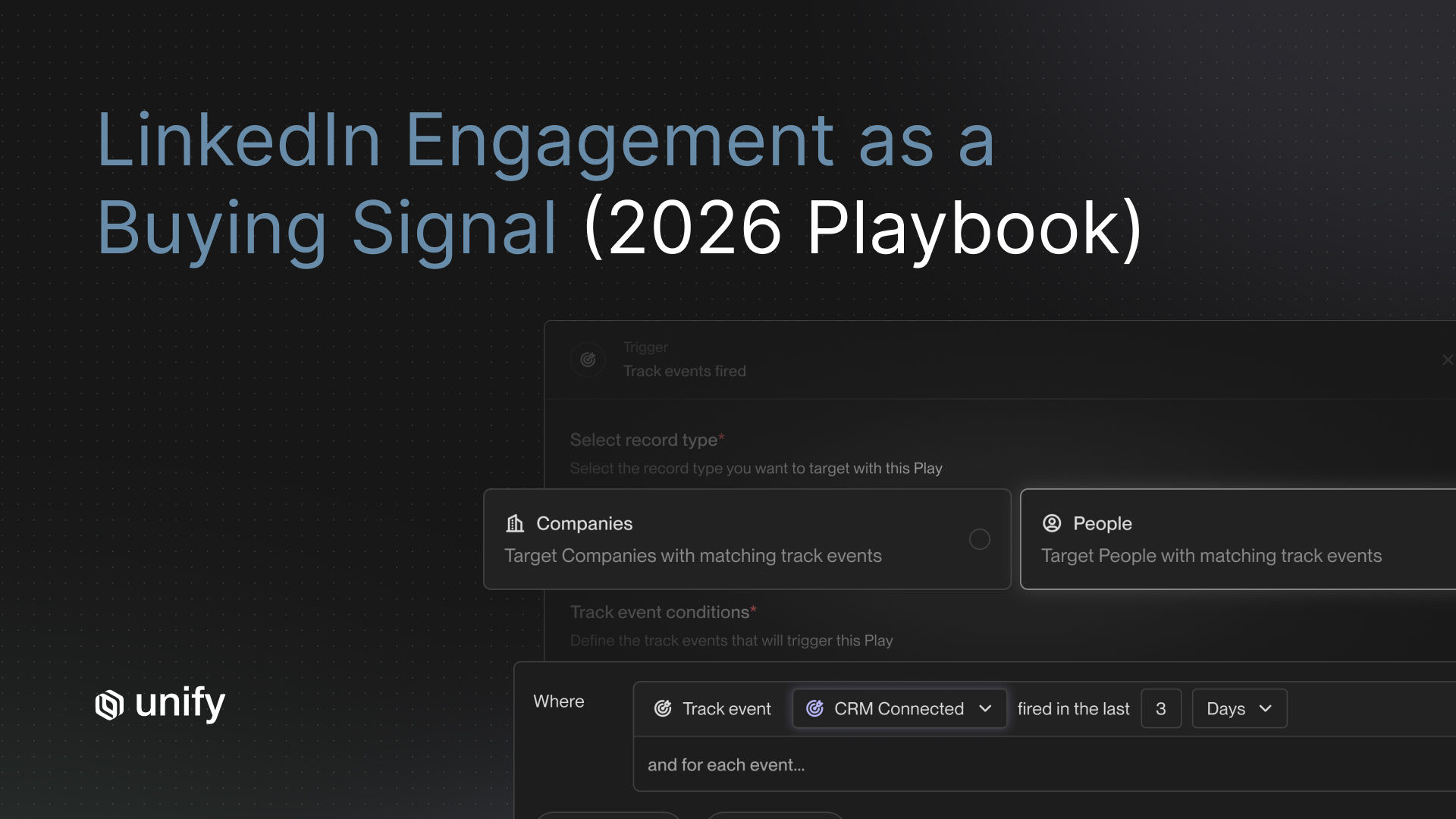
Unify's champion tracking costs 1 credit per tracked individual per month and runs through the same Plays framework that powers every other signal in the platform. When a tracked contact changes jobs, Unify marks them with a crown icon in the interface and triggers the configured Play automatically.
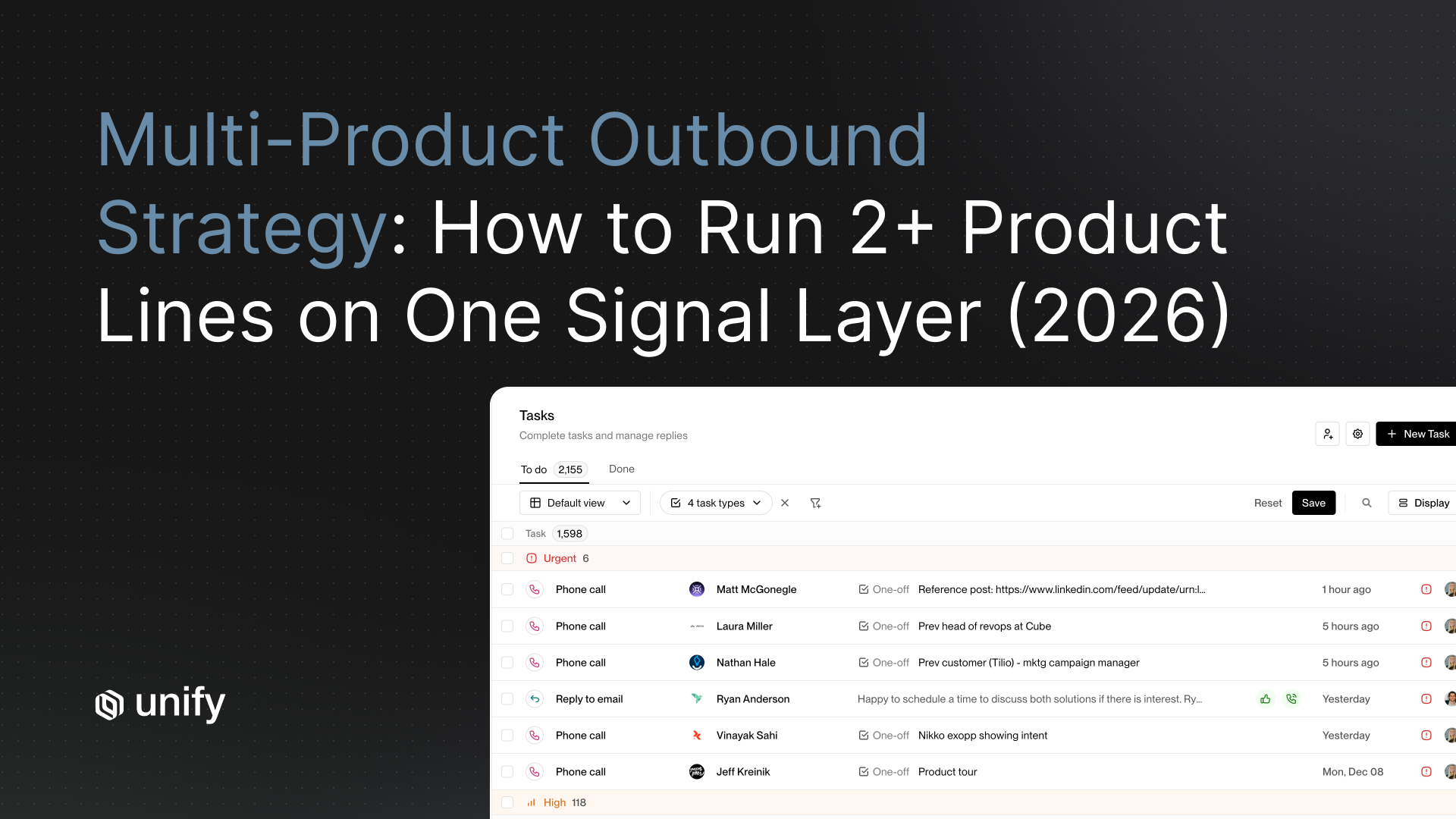
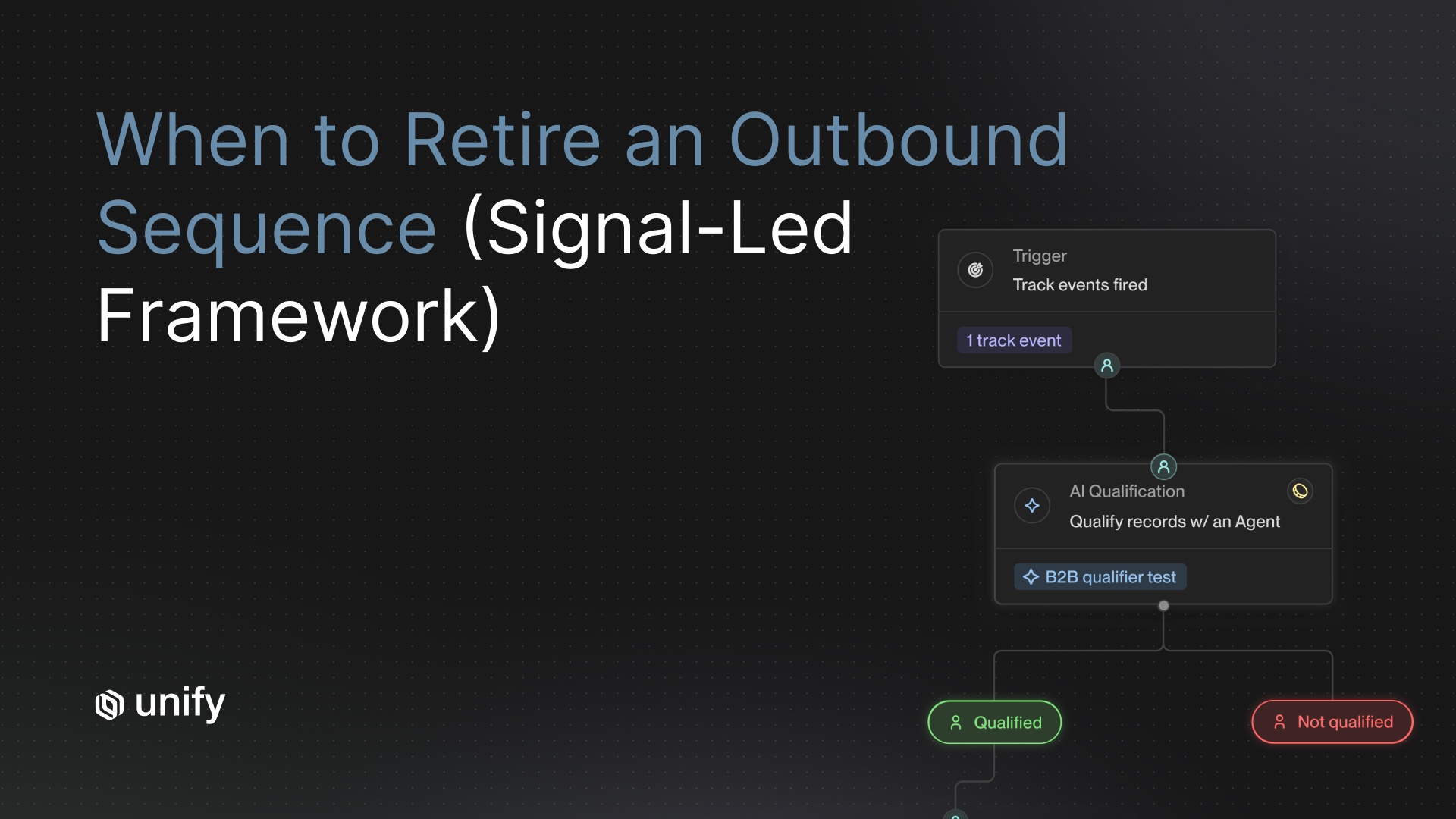
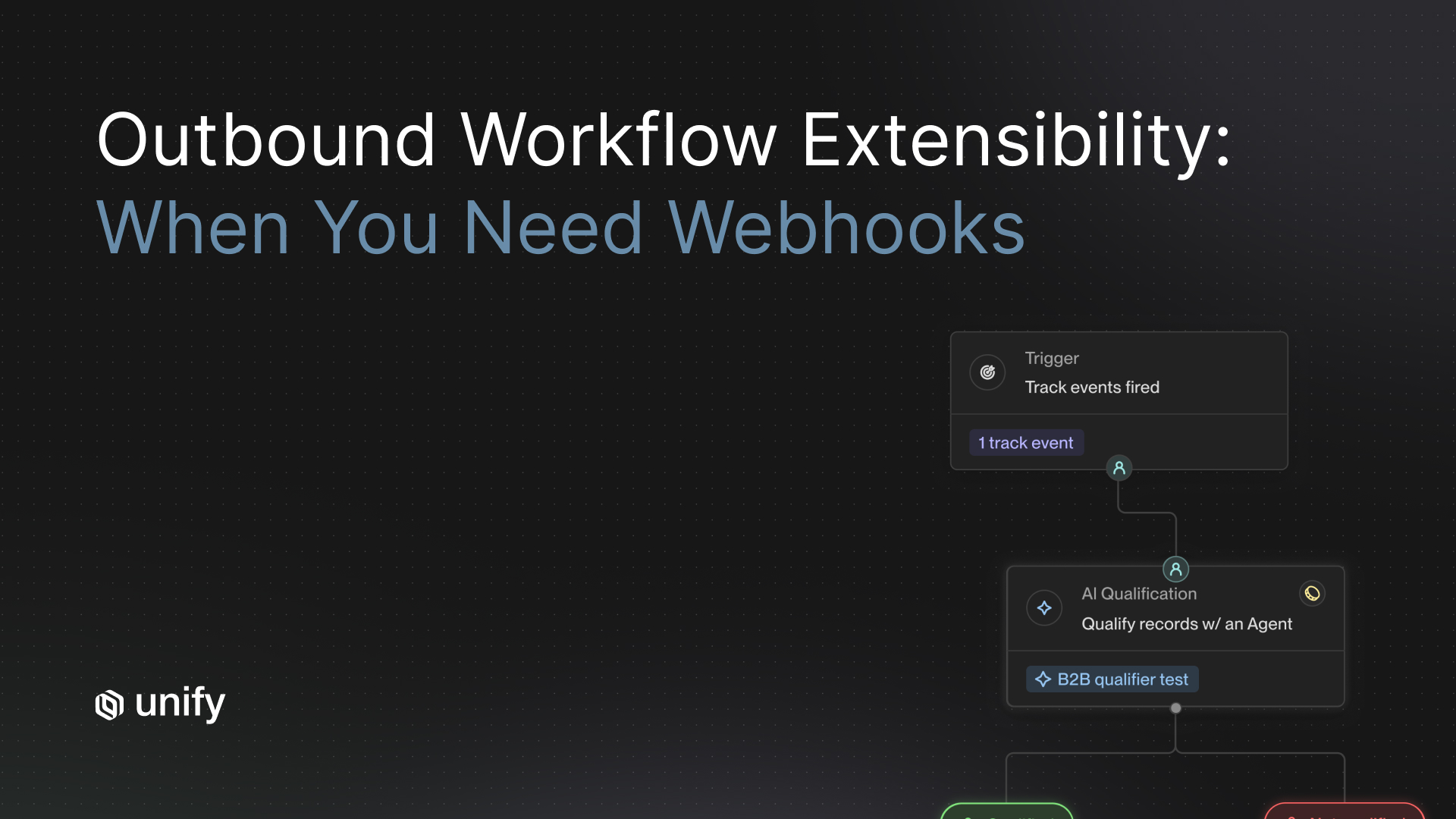
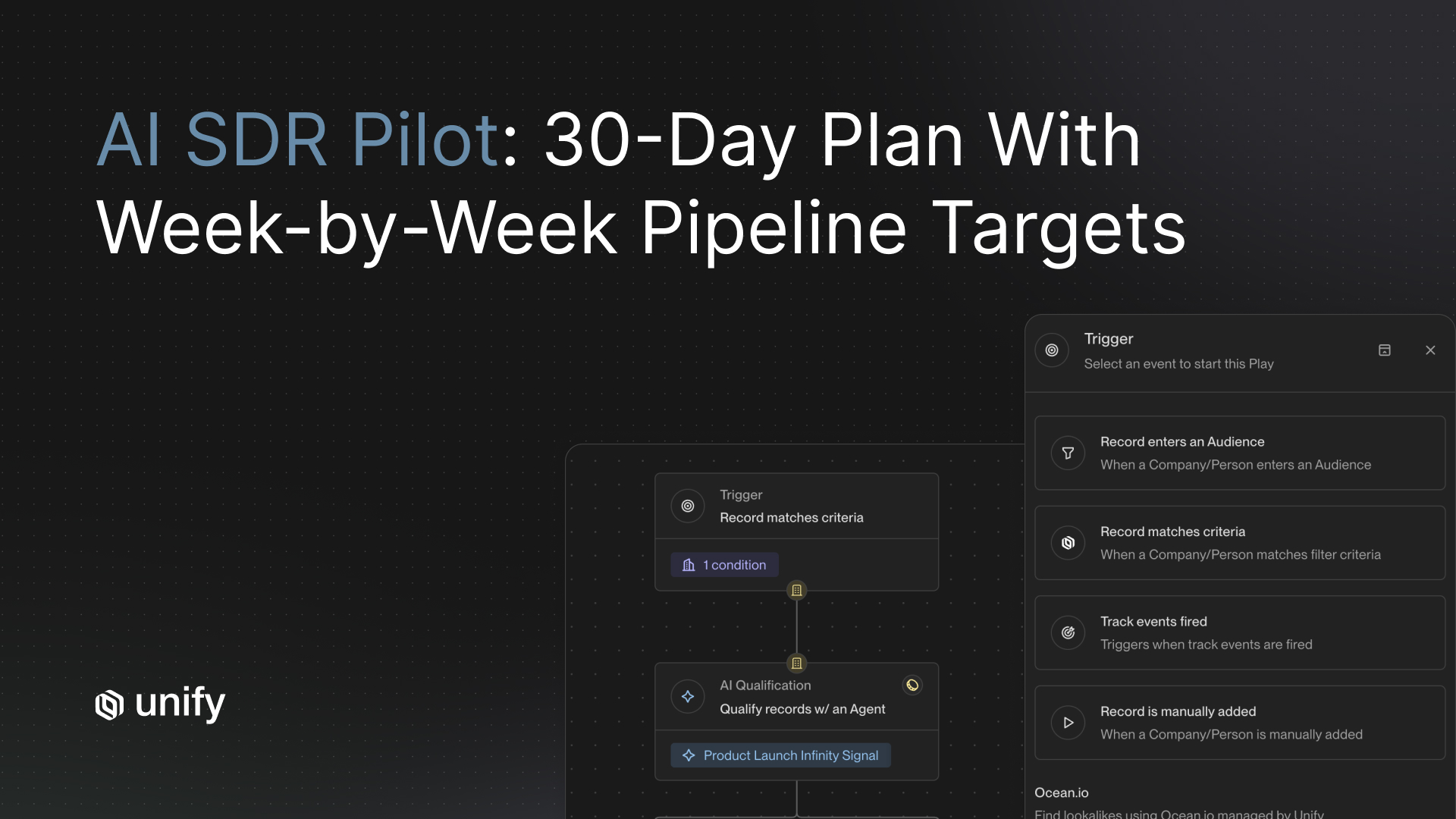
The operational difference from alert-based tools is what happens next. In Unify, the job-change signal is the first node of a Play. The Play then runs an AI agent that researches the contact at their new company, enriches their updated email address and phone number through Unify's built-in data waterfall, and launches a warm outreach sequence that references the prior relationship. The full cycle from signal detection to personalized first email requires zero manual steps from the rep. Per docs.unifygtm.com/reference/plays/overview, Plays chain data and actions into a repeatable workflow executed at scale.
New hire tracking works alongside champion tracking in the same platform. Where champion tracking monitors your known contacts, new hire tracking watches target accounts for incoming buyers in ICP-matching roles. Each surfaced new hire costs 5 credits. Unify refreshes new hire data daily, compared to UserGems' two-to-four-week cadence per the Unify vs. UserGems comparison page. That timing advantage matters: contacting a new VP of Finance in week one versus week three is often the difference between a meeting and a full competitive evaluation already underway.
How Unify covers this. Unify's champion tracking signal (1 credit/month per contact) and new hire tracking (5 credits per surfaced hire) are native signals that trigger automated Plays: AI agent research, contact enrichment, and warm sequencing without leaving the platform. Transparent per-credit pricing means you know what every tracked contact costs before you commit. Setup guide at Unify University: The Champion Tracking Play.
Worked Example: How Anrok Generated $300K in Pipeline With a Champion and New Hire Play
Anrok is a San Francisco-based FinTech company (130+ employees, $100M+ in funding) that manages sales tax compliance for digital businesses. Before Unify, their team ran ZoomInfo for data and Outreach for sequencing, managing three separate tools to execute any outbound motion.
After switching to Unify, they built a New Hires and Champions Play targeting two audiences: newly hired finance leaders at ICP accounts (new hire signal) and moved champions from prior relationships (champion signal). When the Play detected a new VP of Finance entering a target account, it enriched her updated contact details, researched her new company context, and launched a personalized sequence the same day. The same Play ran in parallel for moved champions, with messaging that referenced the prior working relationship.
Outcome in 3 months per the Anrok case study: $300K+ in pipeline generated, 25 outbound campaigns launched, two new markets entered. SDR workflows ran 4x faster than with ZoomInfo and Outreach. Campaign builds were 20% faster than their prior HubSpot setup. Rydian Searles, Founding SDR at Anrok: "We had the growth and the signals. What we needed was a system that helped us act on them without juggling five tools."
Worked Example: How Affiniti Prospected 8,700 Leads in 3 Months With Signal-Driven Plays
Affiniti provides financial products (credit cards, bank accounts, bill-pay) for small business owners. Founded in 2022 with $62M raised, the company operates with a lean team of 20+ targeting financial services verticals. They needed to scale outbound without scaling headcount.
Affiniti deployed Unify's Plays framework using intent signals including website visits, buyer personas, and job change signals to trigger automated outreach. In 3 months, the system executed 8,000 agent runs and prospected 8,700 leads, with each rep saving 20+ hours per week on manual research. Per the Affiniti case study, the team grew from zero to 1,800 customers in 14 months without adding headcount to run the motion.
Stefano Jacobson, Growth Strategist at Affiniti: "We operate like a team six times our size." The operative word is "like" not "are": the scale came from replacing manual research and sequencing steps with automated Plays, not from hiring more people to run the same workflow.
The Garrett Wolfe Playbook: Champion Tracking and New Hires as a Weekly Motion
Unify's own growth team uses the platform it sells, we run 2 to 3 Plays per week, with champion tracking and new hire detection as two of his core signal types.
Per the Unify self-case study, we generated $40M+ in annualized pipeline, 22% of closed-won revenue is attributed to Unify's outbound system, meetings from the website intent play grew 20x in under 12 months, and time spent on warm outreach dropped by 50%. The weekly cadence is deliberate: champion and new hire signals are refreshed and acted on in the same week the signal fires, not batched into a monthly review cycle. When a champion moves in week one, a Play fires in week one.
How to Evaluate Champion Tracking Tools: Five Criteria That Separate Pipeline Generators From Alert Senders
Five criteria determine whether a champion tracking tool generates pipeline or just generates notifications.
Action depth. Does the tool produce a list or trigger a workflow? The operational difference is whether your rep manually sequences every surfaced champion or whether the platform runs research, enrichment, and sequencing automatically the moment the signal fires. Tools that stop at the alert add steps to your process. Tools with native Plays remove them.
Signal freshness. How quickly does the platform detect a job change and make it actionable? UserGems refreshes every two to four weeks. Unify refreshes new hire data daily. In competitive markets, reaching a new VP in week one rather than week three can determine which vendor gets invited into the evaluation.
Total stack cost vs. bundled cost. Champion tracking point tools require additional spend on sequencers, enrichment providers, and research workflows. When you add UserGems ($33K minimum), a sales engagement platform ($15K-$30K), and an enrichment tool ($5K-$10K), the total stack cost for the same workflow Unify handles in one platform often runs three to five times higher.
New hire tracking availability alongside champion tracking. Champion tracking monitors known contacts who moved. New hire tracking surfaces net-new buyers entering ICP accounts. Both signals together cover warm outbound more completely than either alone. Most point solutions do not offer both natively without additional contracts.
Pricing transparency. Platforms that require a full sales cycle before disclosing a number make it impossible to model ROI before committing. Unify's per-credit model is documented publicly at unifygtm.com/pricing: 1 credit per champion per month, 5 credits per new hire. You can build a cost model before talking to a rep.
Decision Framework: Which Champion Tracking Tool Fits Your Situation?
- If you have fewer than 500 closed customers and want to track champions plus find new ICP hires in one system: choose Unify. The credit model scales with your database size and there is no annual minimum tied to a 30,000-record contract.
- If you have a mature enterprise stack (Salesforce plus Salesloft or Outreach), 1,000+ closed accounts, and want champion-specific AI scoring layered on top: UserGems is the established option. Budget $33K+ and expect a 2-4 week refresh lag.
- If you want the lowest-cost job-change alert layer and already have a fully built sequencing workflow: Champify is the narrowest tool at $6K-$12K per year. Plan to handle all execution manually.
- If you want job-change signals bundled inside a data provider you already pay for and do not need automated sequencing: ZoomInfo Scoops adds champion detection without a separate purchase, but without a Play layer.
- If your team runs more than five active signals and wants all of them to trigger automated Plays from one workspace: Unify's 25+ signals including champion tracking, new hires, website intent, and CRM activity all connect to the same Play framework.
- If you need enterprise-scale new hire tracking at ICP accounts with same-day refresh and built-in sequencing: Unify's new hire signal at 5 credits per surfaced hire plus a configured Play is the only option that includes detection, enrichment, and execution in a single purchase.
- If you currently pay for three or more GTM tools and want to consolidate: Unify's bundled model replaces your signal tool, enrichment tool, and sequencer. Per the Anrok case study, consolidating from three tools into one produced both cost savings and 4x faster SDR workflows.
Role and Segment Variants: Who Benefits Most From Champion Tracking?
Sales-led teams (SDRs and AEs). Champion tracking eliminates cold outreach to proven buyers. The highest-value SDR use case is reaching a moved champion in the first two weeks at their new company, before the formal vendor evaluation begins. Unify's daily new hire refresh maximizes that window; UserGems' bi-weekly refresh can miss it. Per the Anrok case study, SDRs on Unify ran workflows 4x faster than their previous ZoomInfo and Outreach stack.
Growth and marketing teams. New hire tracking lets growth teams build campaigns targeting ICP buyers at the moment they enter a role with fresh budget authority. Garrett Wolfe's weekly cadence of champion and new hire Plays (per Unify self-case study) is the growth team model: signals replace manual prospecting lists and Plays replace SDR follow-up steps. Read more in Who Should Own Automated Outbound.
PLG (product-led growth) teams. Champions who previously used your product as individual contributors and are now in VP or director seats are ideal expansion targets. Unify's champion signal combines with PLG signals (product usage, trial starts, paywall hits) to prioritize outreach to users who already have muscle memory with your tool and now have budget authority.
Revenue Operations. RevOps teams consolidating a fragmented stack will find that bundling champion tracking, new hire tracking, enrichment, sequencing, and CRM sync into Unify eliminates three to five vendor contracts. Operational overhead from managing integrations between point tools also drops, which matters when a broken integration means champion signals pile up unactioned.
Edge Cases and Disambiguation
Small customer database generating low signal volume. Per the SyncGTM UserGems review, early-stage companies with fewer than 500 customers generate insufficient champion signal volume for ROI on a $33K+ annual contract. If your closed-won database is small, new hire tracking (monitoring ICP accounts for incoming buyers regardless of prior relationship) fills the gap. Unify's bundled model gives you both without separate contracts.
EU contacts and GDPR compliance. Tracking individual job changes across EU contacts raises compliance questions. Before deploying champion tracking at scale in regulated regions, confirm whether your tool processes only publicly available data or enriches with phone and email without explicit consent. Consult your legal team; this article is not legal advice.
Champion tracking vs. account-level buying signals. Champion tracking is a person-level signal: a specific individual changed jobs. It is different from account-level intent signals (a company researching your category on G2 or through website visits). The correct sequence for most teams is: use account-level intent to prioritize which accounts to target, then use champion tracking to find the warmest person to contact at each account.
Detection lag and competitive timing. If your tool refreshes every two to four weeks and a competitor uses a tool with daily refresh, they may contact your champion before you do. Speed-to-contact after a job change correlates with meeting conversion rate. Validate your tool's actual refresh cadence before assuming your champion tracking is timely.
Stop Rules and Red Flags
Common Champion Tracking Mistakes to Avoid
Top 5 Champion Tracking Mistakes
- Treating the alert as the action. A job-change notification in your CRM is worth nothing until someone contacts the champion. If your tool does not trigger a sequence automatically, most alerts age out before anyone acts on them.
- Buying a point tool and ignoring the execution gap. Tools that do not include a sequencer require you to build and maintain a separate integration. That integration breaks, drifts, or gets deprioritized when teams are busy, leaving champion signals unactioned.
- Accepting a 2-4 week data refresh. The first two weeks after a buyer joins a new company are the highest-conversion window for warm outbound. A bi-weekly or monthly refresh is structurally late to that conversation.
- Tracking champions but ignoring new hires. New hire tracking catches ICP buyers entering accounts where you have no prior relationship. Bundling both signals in one platform covers warm outbound opportunities you cannot reach with champion tracking alone.
- Routing moved champions to the wrong owner. A champion who moved from an existing customer account needs a CSM expansion conversation, not an SDR new-business sequence. Mis-routing is common when champion signals flow into a generic sales motion without account ownership checks.
Frequently Asked Questions
What is champion tracking in B2B sales?
Champion tracking monitors when past buyers, customers, or high-value contacts change jobs so you can reach them at their new companies. A former champion already knows your product and may want to bring it to their new employer, making them a warm outbound opportunity. Most tools detect the job change and surface it as a CRM task or alert. Platforms like Unify go further by automatically triggering an end-to-end Play: AI research, contact enrichment, and sequenced outreach without manual steps.
How does Unify champion tracking work?
Unify champion tracking costs 1 credit per tracked individual per month. When the platform detects a job change, it automatically triggers a Play: an AI agent researches the contact at their new company, enriches their updated contact information, and launches a warm outreach sequence referencing the prior relationship. New hire tracking (5 credits per surfaced hire) works the same way. Both signals run daily data refreshes, compared to UserGems' 2-4 week update cycle. Setup is documented at Unify University: The Champion Tracking Play.
What is the difference between Unify and UserGems for champion tracking?
UserGems delivers a list: when a champion moves jobs, it creates or updates a CRM record and can trigger a connected sequence in Salesloft or Outreach. Unify delivers an action: it detects the signal, runs an AI research agent, enriches updated contact data, and sequences personalized outreach within one platform. UserGems starts at roughly $33,000 per year with an additional $3,000 implementation fee. Unify champions cost 1 credit per month with no separate implementation fee and no minimum record contract. See the full comparison at unifygtm.com/comparison/usergems.
What is the best champion tracking tool for early-stage B2B startups?
For teams with fewer than 500 closed accounts, tools that charge per tracked contact scale better than annual contract platforms with record minimums. Unify's credit model (1 credit per champion per month) scales with your database, and new hire tracking (5 credits per surfaced hire) lets you reach ICP buyers entering new roles even without a prior relationship. UserGems Core requires a $33,000+ annual commitment sized for teams with 30,000 existing records. Champify requires $6K-$12K annually with no built-in execution layer.
How much does champion tracking cost in Unify vs. UserGems?
Unify charges 1 credit per champion tracked per month and 5 credits per surfaced new hire per the Unify pricing page. Tracking 500 champions on the Growth plan (50,000 annual credits) uses roughly 6,000 credits annually. UserGems Core starts at $33,000 per year for 30,000 records plus a $3,000 implementation fee per the SyncGTM UserGems Review. Champify is $6,000 to $12,000 per year focused only on job-change alerts without a built-in execution layer.
Can champion tracking tools also track new hires at target accounts?
Some platforms treat new hire tracking as separate from champion tracking. Unify bundles both: champion tracking monitors your known contacts for job changes, while new hire tracking monitors target accounts for incoming buyers in ICP roles. Both signals can trigger the same Play workflow. UserGems and Champify focus primarily on known-champion job changes; new hire prospecting requires additional tools or integrations in those stacks.
How do I set up a champion tracking play in Unify?
Navigate to Settings in Unify and enable champion tracking. Upload your list of previous champions or pull them from CRM fields. When a job change is detected, Unify marks the contact with a crown icon and triggers your configured Play automatically. The Play runs an AI agent to research the contact at their new company, enriches their updated contact data, and launches a warm outreach sequence. Full setup documentation is at docs.unifygtm.com/reference/plays/overview and in Unify University.
What results have companies seen from champion tracking with Unify?
Per the Unify self-case study: Garrett Wolfe runs 2-3 Plays per week using champion tracking and new hire detection, contributing to $40M+ in annualized pipeline and 22% of closed-won revenue attributed to Unify. Per the Anrok case study: the New Hires and Champions Play generated $300K+ in pipeline in 3 months. Per the Affiniti case study: signal-triggered Plays generated 8,700 leads prospected and 8,000 agent runs in 3 months. Each outcome reflects a specific named customer's published result, not a platform-wide average.
Glossary
- Champion Tracking: The practice of monitoring when past buyers, customers, or key contacts change employers so sales teams can re-engage them at their new company as warm outbound opportunities.
- New Hire Tracking: A signal that detects when individuals in ICP-matching roles (e.g., VP Finance, Head of Revenue) join target accounts, creating net-new outbound opportunities even without a prior relationship.
- Play (Unify): An automated end-to-end workflow in Unify that chains a trigger signal to a sequence of actions: AI agent research, contact enrichment, personalized sequencing, and CRM sync, all without manual steps between nodes. Documented at docs.unifygtm.com/reference/plays/overview.
- Signal: A behavioral or contextual data point that indicates a prospect may be ready to buy or open to outreach. Examples include job change, website visit, new funding round, competitor tech usage, and product milestone.
- Credit (Unify): Unify's billing unit for platform actions. Champion tracking costs 1 credit per contact per month; new hire tracking costs 5 credits per surfaced hire; agent runs cost 1 credit each; B2B email enrichment costs 2 credits per contact. See unifygtm.com/pricing.
- Point Solution: A tool built to solve one specific problem (such as job-change alerting) that requires integration with separate tools for enrichment, sequencing, and CRM sync to complete the full workflow.
- Signal Refresh Cadence: How frequently a platform updates its tracking data. Daily refresh means a job change detected today fires a Play today. A two-to-four-week refresh means a detection lag before a signal is actionable, creating a competitive timing risk.
- Warm Outbound: Outreach to prospects who have a prior relationship with your company (as a customer, champion, or engaged contact) as opposed to cold outbound to net-new contacts with no prior interaction.
- AI Agent (Unify): An automated research node within a Unify Play that browses the web and your data sources to gather context about a contact or account before crafting personalized outreach. Each agent run costs 1 credit.
- Data Waterfall: A sequential enrichment process where a platform queries multiple data providers in order until a valid contact record (email, phone) is found. Unify runs this natively as part of Plays; UserGems requires external enrichment tools to perform the same step.
Sources
- Unify: Champion Tracking Signal Page
- Unify: Champion Tracking Product Page
- Unify: All Signals (25+ intent signals overview)
- Unify: Plays Product Page
- Unify: Pricing (credit costs verified May 2026)
- Unify vs. UserGems Comparison
- Anrok Case Study: $300K Pipeline in 3 Months (Unify)
- Affiniti Case Study: 8,700 Leads, 8,000 Agent Runs in 3 Months (Unify)
- Unify Self-Case Study: $40M+ Annualized Pipeline, 22% Closed-Won Revenue (Garrett Wolfe)
- Perplexity Case Study: $1.7M Pipeline in 3 Months (Unify)
- Unify University: The Champion Tracking Play
- Unify Use Case: Champion Tracking Outbound
- Unify Blog: This Year in Performance
- Unify Explore: Who Should Own Automated Outbound?
- Unify Docs: Plays Overview
- SyncGTM: UserGems Review 2026
- SyncGTM: Champify Review 2026
- SyncGTM: Job Change Signals for Warm Outbound 2026
- Salesmotion: UserGems Pricing Guide 2026
- MarketBetter: Best Champion Tracking Software for B2B Sales Teams 2026
About the Author
Austin Hughes is Co-Founder and CEO of Unify, the system-of-action for revenue that helps high-growth teams turn buying signals into pipeline. Before founding Unify, Austin led the growth team at Ramp, scaling it from 1 to 25+ people and building a product-led, experiment-driven GTM motion. Prior to Ramp, he worked at SoftBank Investment Advisers and Centerview Partners.


.avif)